Zoom EPA Passaic River Sludge Plant Meeting Set for Mon. Feb. 23, 2026
Feb 18, 2026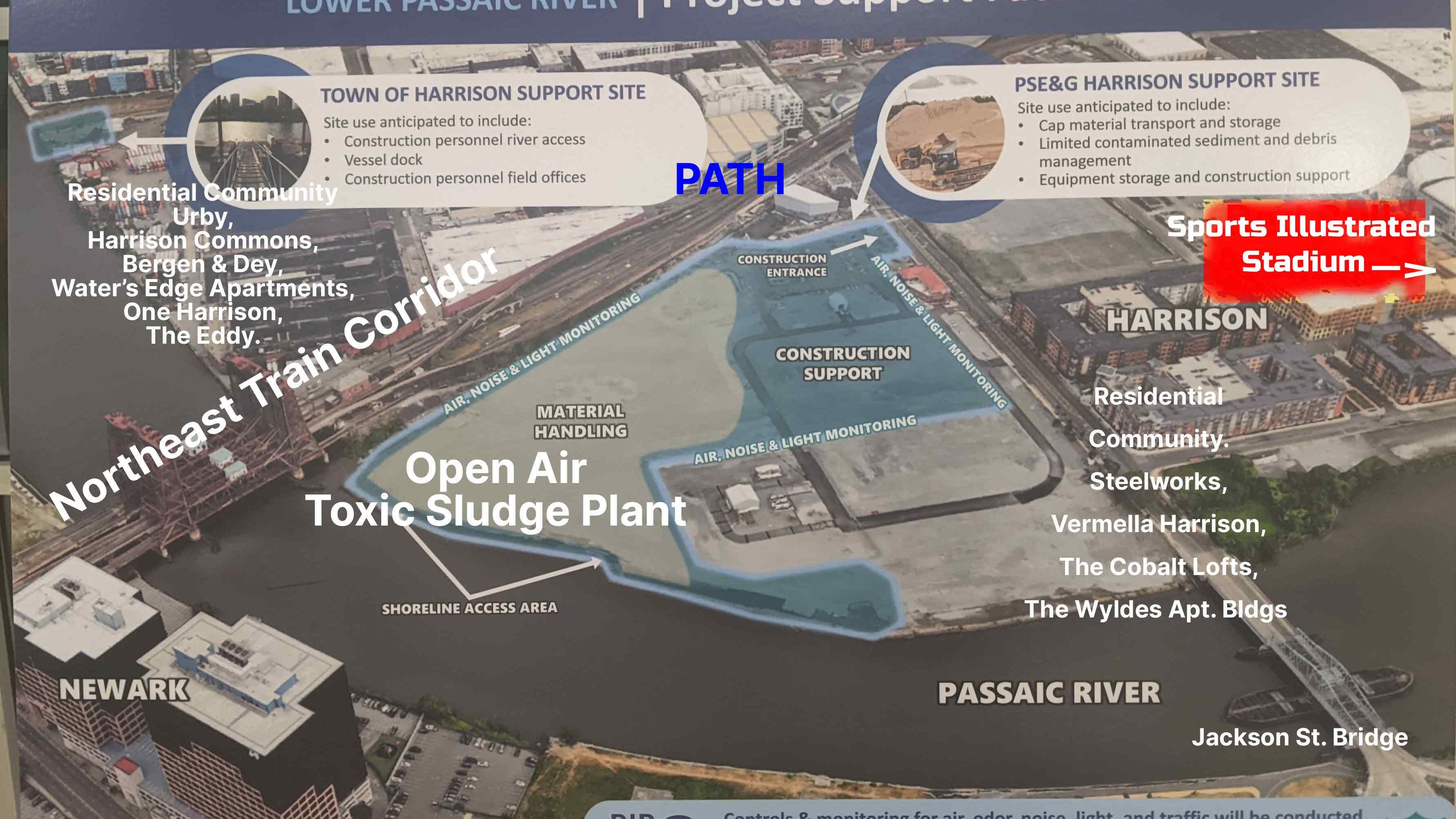
The United States Environmental Protection Agency (EPA) will hold the next meeting of the Passaic River Community Advisory Group (CAG) on Monday, February 23, 2026, at 6 p.m. via Zoom. There will be no in-person option for residents. The Public is invited to attend the meeting. The Zoom meeting link and call-in phone numbers are located at the end of this article.
The CAG was created to facilitate dialogue between the EPA and communities impacted by the Diamond Alkali Superfund cleanup of the lower Passaic River, among other Superfund sites. By federal design, CAGs are intended to serve as a bridge between the public and federal decision-makers. It is supposed to be a forum where community members can ask questions, express concerns, and receive direct responses from regulators overseeing hazardous waste remediation.
Public Participation: Form Over Substance?
At recent Zoom meetings, however, the structure of participation has raised concerns among residents. While CAG members and EPA employees have participated live on Zoom, members of the general public have largely been limited to typing their questions into the chat. CAG members then selected which questions would be read aloud and addressed.
According to attendees, not all submitted questions were answered, and there was no opportunity for follow-up or rebuttal. Critics argue that this format undermines the spirit, if not the letter, of federal public participation requirements. A chat-filtered system, they contend, transforms what should be a public dialogue into a curated presentation.
The absence of an in-person option has further amplified those concerns, particularly in communities such as Harrison and Newark’s Ironbound section, where the proposed onshore processing of toxic dioxin-laden sludge has generated intense debate.
The Federal Law Behind Community Advisory Groups
Community Advisory Groups were formalized within the EPA’s Superfund framework to ensure meaningful public involvement in hazardous waste cleanups. The model gained additional emphasis during the tenure of the late U.S. Senator Frank Lautenberg of New Jersey, who championed stronger community protections and transparency in environmental regulation.
Lautenberg was a leading advocate of federal right-to-know laws and community notification standards, building on the Emergency Planning and Community Right-to-Know Act (EPCRA) and other federal environmental statutes that require disclosure of toxic substances and meaningful public input. His legislative efforts reflected a core principle: communities directly affected by environmental hazards must have both access to information and a voice in decisions.
CAGs were conceived in that spirit — not merely as information sessions, but as participatory forums where residents could question, challenge, and influence cleanup decisions affecting their neighborhoods. The Town of Harrison and the City of Newark are poster children for who should be fully participating in EPA CAG meetings.
Toxic Sludge Plants and CAG Silence
The February 23, 2026, meeting comes amid ongoing controversy over two proposed sludge processing facilities associated with the Passaic River cleanup: one at the Passaic Valley Sewerage Commission (PVSC) in Newark’s Ironbound section and another at the PSE&G property in Harrison’s Redevelopment Zone.
The Harrison site is particularly contentious because it is located within a residential redevelopment district. Luxury apartment buildings and occupied housing begin across the street from the proposed staging and processing area, where toxic dioxin-contaminated sediment would be brought ashore. In addition, toxic debris from the Passaic River will be brought onto land and then shipped out via dump trucks to certified toxic sludge landfills, yet to be identified.
Critics argue that the CAG has not taken a formal position opposing the siting of these facilities in densely populated residential areas. Some residents question whether the advisory group is fulfilling its mandate to advocate for community health and environmental justice.
The Unfulfilled Promise of a Second Harrison Meeting

At a public meeting in Harrison on August 27, 2024, the EPA’s Project Manager for the Passaic River cleanup, Alice Yeh, pledged to schedule a follow-up meeting in the Town of Harrison. That second meeting has yet to occur.
For residents who have raised concerns about airborne dioxin exposure during sludge handling and processing, the delay has fueled frustration and distrust. It does not help that Harrison Mayor James Fife and Harrison Councilman James Doran LIED to the public, stating in 2022 that the Sludge Plant was NOT coming to the Town of Harrison. Dioxin causes cancer.
Local Leadership Under Scrutiny
Harrison Mayor James Fife and Councilman James Doran have publicly expressed support for the project, emphasizing redevelopment considerations and assurances of federal oversight.
However, critics, including several residents and community stakeholders, allege that Mayor Fife and Councilman Doran intentionally LIED in 2022 during a contested Mayoral & Council election that they were not supporting a Toxic Sludge Plant in Harrison and that their opponent was lying when he started a Petition against the planned Harrison EPA Toxic Sludge plant being constructed at the PSE&G site. The public was lied to, and it expressed its dismay at the August 2024 EPA Meeting in Harrison, NJ.
Mayor Fife and Councilman Doran have maintained that the EPA project is a federally managed cleanup effort and have framed the initiative as part of a broader environmental remediation strategy. Opponents counter that local leadership had a duty to more forcefully advocate against placing a toxic processing operation in a residential zone. Mayor James Fife and Councilman James Doran continue to claim they did not LIE to the public, despite clear evidence they LIED.
The debate now centers not only on environmental risk but on transparency, governance, and whether residents were given accurate information at critical decision points.
What to Expect on February 23
The February 23, 2025, CAG meeting is expected to include updates on dredging operations, sediment transport logistics, and onshore processing plans. Residents seeking to participate can use the following Zoom sign-in and call-in phone links. Please note that you will not be able to ask any questions or make comments if you are on the phone, as the Chat feature is not available on the phone. Use the Zoom link on a computer to ask a question or make a statement during the meeting via Chat.
Meeting link: https://us06web.zoom.us/j/82802457096
Call in Phone Number: (646) 558 8656
Alternate Call In Number: (301) 715 8592
Meeting ID: 828 0245 7096
For many in Harrison and Newark, the key question is not whether the EPA will provide updates, but whether the public will be given a genuine opportunity to speak, ask questions, and be heard.
As the Passaic River cleanup moves from water to shoreline, the test of federal community engagement promises may lie less in formal presentations and more in whether the community’s voice is allowed to rise above the chat box.
YourHarrison.com encourages residents to share their thoughts after reading this article through the Community Discussion Board.
For those not yet registered, participation is free and open to anyone who wants to stay engaged with Harrison’s local events, businesses, and community conversations. It's a Free Membership. Sign up today and be part of the conversation
Submit An Article