Labor Day:Harrison’s Industrial Past Gives Way to a Residential Future
Sep 04, 2026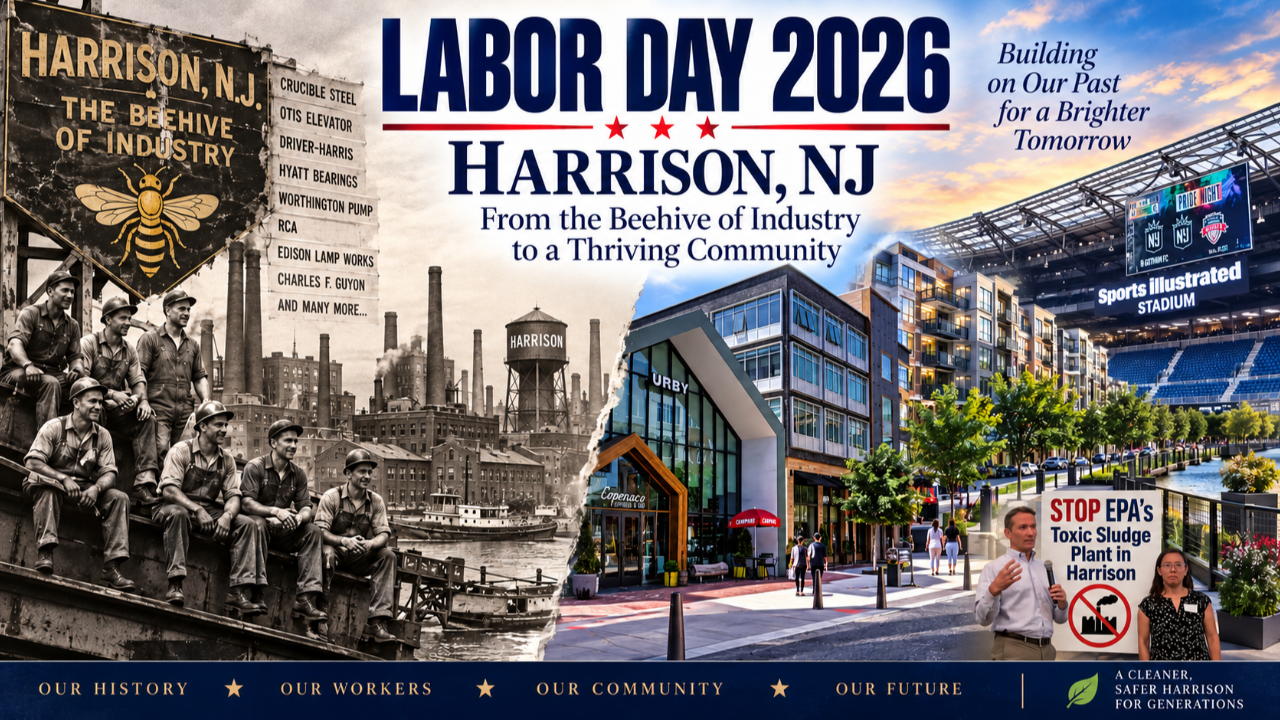
Labor Day has a special significance in Harrison, New Jersey. Long before luxury apartment buildings, restaurants, and Sports Illustrated Stadium transformed the neighborhood surrounding the Harrison PATH station, thousands of men and women reported for work each day to enormous factories, steel mills, foundries, and machine shops that filled much of southern Harrison.
The sounds were different then. Instead of construction associated with redevelopment and crowds walking toward soccer matches and the PATH station, factory whistles, railroad cars, machinery, furnaces, and workers changing shifts filled the air.
This was the Harrison that earned a remarkable nickname: The Beehive of Industry.
And on Labor Day 2026, Harrison's industrial history provides an opportunity to remember not merely the companies that occupied those enormous factories, but the generations of workers whose labor made those companies successful.
President Taft Discovers a “Hive of Industry”
The nickname traces to President William Howard Taft's visit to Harrison during his 1912 reelection campaign.
According to the Town of Harrison's official history, local officials persuaded Taft to include Harrison on his New Jersey itinerary. More than 6,000 people reportedly turned out despite pouring rain.
After seeing Harrison's remarkable concentration of factories, Taft told the crowd that residents had reason to be proud of their “Hive of Industry.”
The description stuck.
Harrison subsequently adopted The Beehive of Industry as its motto, a description that remains part of the Town's identity more than a century later.
And it was hardly an exaggeration.
Within Harrison's approximately 1 square mile stood an extraordinary collection of American manufacturers.
A 1939 aerial view showed industrial complexes belonging to Driver-Harris, RCA, Crucible Steel, Worthington Pump, Hyatt Roller Bearings, Reuther Foundry, Campbell Foundry, Otis Elevator, Newark Barrel Company, Schrivers' Foundry, Allcraft Corrugated and Kullman Dining Car Company.
Other Harrison industries over the years included Edison Lamp Works, Peter Hauck Brewery, Remco Industries, Nopco Chemical, Hartz Mountain, Ringgold Paper Company, and Charles F. Guyon.
That is an astonishing industrial concentration for a municipality of Harrison's size.
Crucible Steel Dominated Southern Harrison
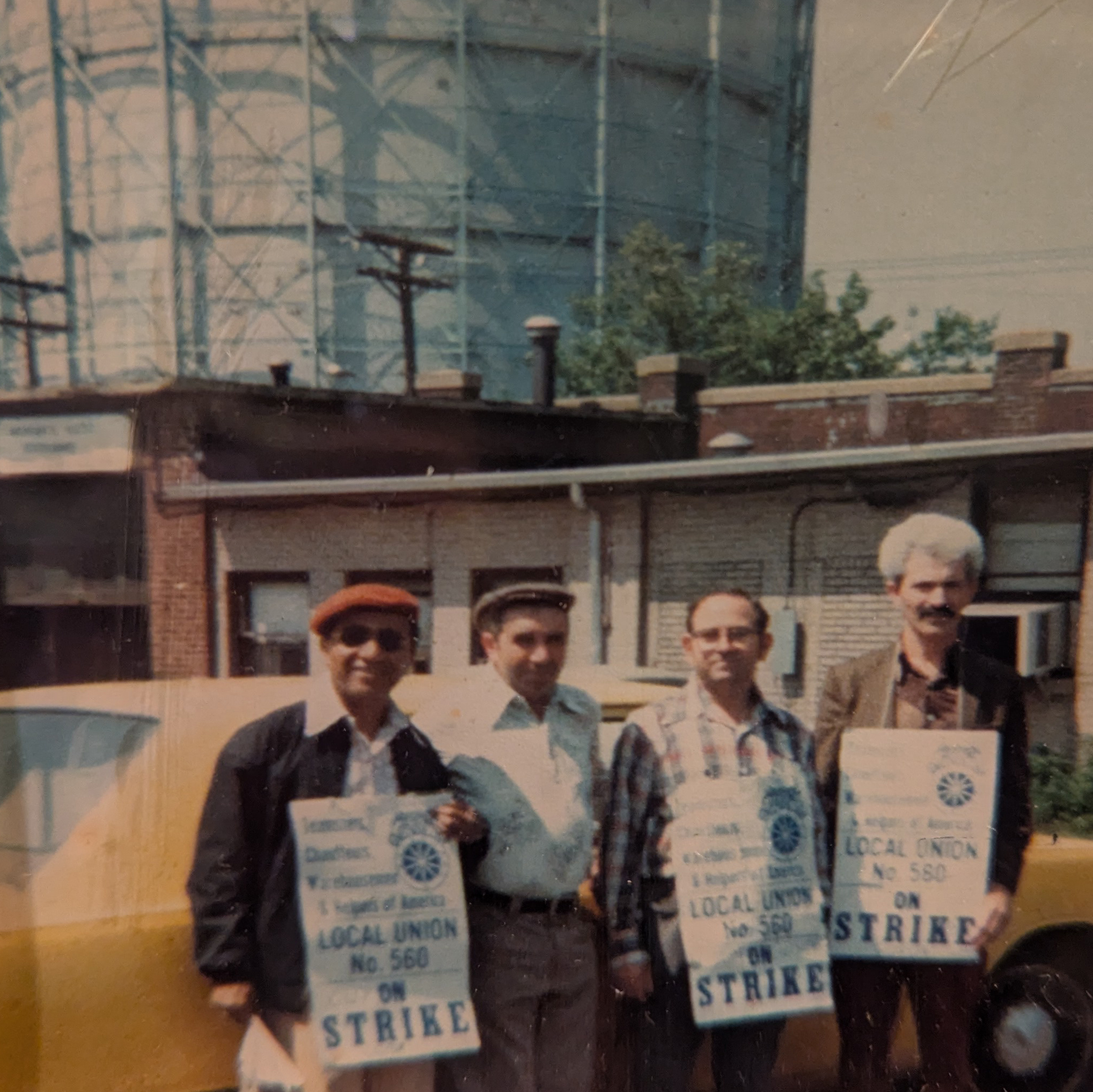
Charles F. Guyon Local 560 Teamsters Union Strike 1980s
Among the most important names in Harrison's industrial history was Crucible Steel.
Its sprawling industrial property occupied part of the neighborhood south of today's Harrison PATH station, including land since redeveloped with residential buildings and new streets.
Today, names such as Steel Works, Crucible Drive, and Guyon Drive provide reminders of what once stood there.
Crucible's enormous buildings were designed for heavy manufacturing. Furnaces produced molten metal, and generations who lived across the Passaic River in Newark remembered seeing the orange glow of molten steel inside the Harrison works at night.
Crucible was already an important military supplier during World War I. The company received substantial wartime contracts for shells and other military products, and its operations ran around the clock during periods of wartime demand.
After Crucible's era ended, portions of the complex were occupied by Charles F. Guyon, whose industrial piping operations continued Harrison's tradition of heavy fabrication.
The enormous industrial buildings eventually disappeared as Harrison's southern redevelopment progressed. But the names left behind on streets and buildings amount to a geographical history lesson for anyone who knows what they mean.
Otis, Worthington, Driver-Harris and Hyatt
Crucible was hardly alone.
Otis Elevator operated in Harrison during the period when elevators were helping make the modern American skyscraper possible. It also produced escalators, some of which are still in operation. One famous Otis Elevator is in Lisbon, Portugal, and is still in operation.
Worthington Pump and Machinery was another major Harrison employer. Its operations were part of a company whose pumping technology had applications across industry and infrastructure. Harrisonian Joseph Supor purchased the Worthington Pump and Machinery property, and one of the famous rigging stories was the retrieval of the US Airways Flight 1549 from the Hudson River by Joseph Supor Rigging and storing it in one of the hangars at the former Worthington Pump and Machinery buildings. Supor later transported the US Airways plane to Charlotte, North Carolina, for its aerial museum. Supor Blvd was named in honor of Joseph Supor and sits in front of his former property and home of Supor Rigging and formerly Worthington Pump.
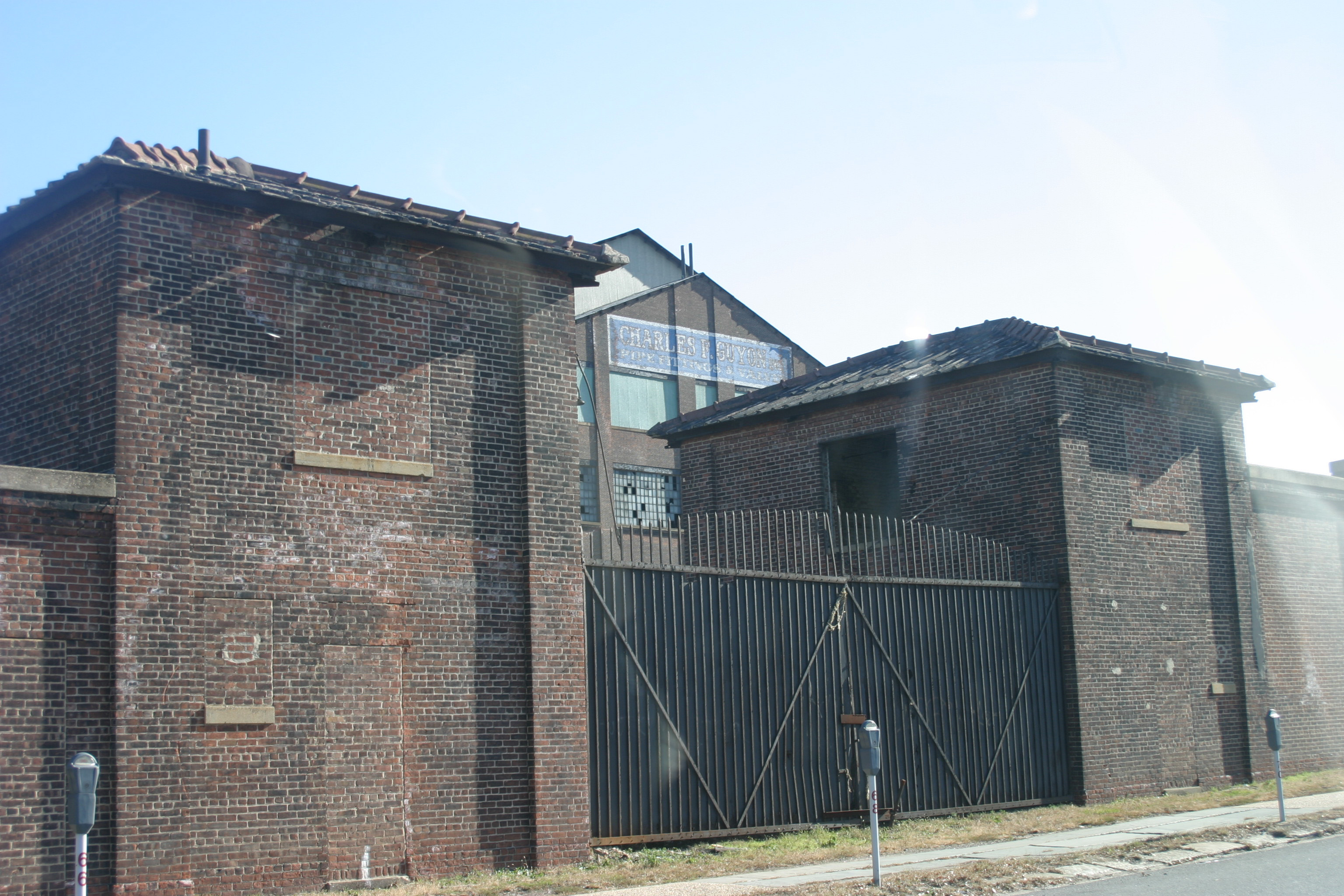
Crucible Steel Main Entrance; subsequently Charles F. Guyon Pipe Cmpany
Then there was Driver-Harris, founded in Harrison around the turn of the 20th century. Driver-Harris specialized in heat-resistant and electrical-resistance alloys and wire. Newark Public Library's historical collection describes Driver-Harris as producing heat-resistant wire with consumer, manufacturing, and military applications.
Another enormous Harrison operation was Hyatt Bearings. Hyatt became associated with General Motors, and its Harrison operation proved particularly important during World War II. Contemporary historical accounts credit the Harrison factory with producing bearings for American tanks. The Harrison plant earned the prestigious Army-Navy “E” Award for wartime production excellence multiple times.
That distinction is important because surviving New Jersey Historical Society records specifically identify Driver-Harris Company, Hyatt Bearings Division, and Worthington Pump & Machinery Company—all in Harrison—among New Jersey companies represented in its World War II production-awards collection.
Edison and RCA Put Harrison on the Technological Map
Harrison's industrial history wasn't limited to steel and heavy machinery. It was also part of the technological revolution.
The Edison Lamp Works opened a Harrison factory in 1882 at Bergen Street and South Fifth St., where the Harrison Mini Mall now stands. According to the Town's history, the operation began with approximately 150 employees but had grown to about 4,000 workers by 1912 as electric lighting spread across America.
After Edison phased out operations, Radio Corporation of America (RCA) acquired the property around 1930.
RCA expanded the Harrison operation into a sprawling complex encompassing approximately 9.5 acres and 26 buildings. According to the Town's historical account, the Harrison operation ultimately manufactured more than three billion radio tubes.
Remarkably, the Town reports that more than 80 percent of RCA's Harrison workforce was female, making the plant an important chapter not only in Harrison's industrial history but also in the history of women in American manufacturing.
During World War II, electronics, radio communications, and vacuum-tube technology became essential to the Allied war effort.
Harrison was therefore producing not simply steel and machinery but some of the technology needed by a modern military.
Harrison Goes to War
World War II may have represented the high-water mark of Harrison's “Beehive.”
The Town of Harrison's own history states that during the war a community of roughly 14,000 residents had more than 90,000 workers commuting into Harrison each day. Think about that number.
For every Harrison resident, several additional people were entering town to work. Other historical accounts put Harrison's daytime population at approximately 100,000 during the industrial era.
Factories operated multiple shifts. Trains brought workers into town and carried raw materials and finished products. Harrison's location beside the Passaic River and major railroad lines, and its proximity to Newark, New York Harbor, and the nation's transportation network, made it an almost ideal industrial location.
New Jersey as a whole became an important component of America's wartime manufacturing machine. Northern New Jersey's dense industrial corridor, transportation infrastructure and proximity to New York Harbor made the region particularly important.
Harrison sat squarely within that industrial network. Hyatt produced bearings associated with American tanks. Driver-Harris manufactured specialized alloys. Worthington's machinery served industrial needs. RCA's electronics and radio technology supported the communications age. Steel production and fabrication supplied material essential to a nation fighting a global war.
Harrison's workers were fighting World War II from factory floors.
The Workers Behind the “Beehive”
That history is why Labor Day has particular meaning in Harrison.
Factories do not produce anything by themselves.
Behind the corporate names were steelworkers, machinists, foundry workers, electricians, pipefitters, railroad workers, mechanics, laborers, and thousands of other skilled and unskilled workers.
Industrial employment could be dangerous, physically demanding and exhausting. Furnaces were hot. Machinery was unforgiving. Shifts were long.
Organized labor consequently became an important part of industrial life.
Historical accounts of Crucible Steel describe a seven-week work stoppage over disputes about working conditions and wages, before management and labor ultimately reached an agreement and production resumed.
Such disputes were part of a much larger American labor story. During World War II, organized labor's national leadership generally honored no-strike pledges made after America's entry into the war, although thousands of mostly smaller work stoppages nevertheless occurred nationwide. The objective was to balance workers' grievances with the urgent need to maintain war production.
Labor Day grew out of this movement. The first Labor Day observance took place in New York City in 1882, and Congress made the first Monday in September a federal holiday in 1894. The original vision included a parade demonstrating the strength and solidarity of trade and labor organizations followed by festivities for workers and their families.
For a factory town like Harrison, that message would have been particularly relevant.
Was Harrison on Hitler's Bombing List?
One particularly intriguing story has circulated in connection with Harrison's wartime history: that Adolf Hitler's Nazi government had Harrison on a list of American locations to be bombed.
Given Harrison's extraordinary concentration of military-related manufacturing, the story has a certain logic.
A successful attack on the Harrison-Newark-Kearny industrial corridor could theoretically have struck steel production, bearings, machinery, communications equipment, railroads, and nearby shipbuilding operations. Across the municipal border, Kearny's Federal Shipbuilding and Drydock operation was producing warships at an extraordinary pace; by 1943, Rutgers' history of New Jersey during World War II reports that Federal Shipbuilding employed approximately 52,000 workers.
Northern New Jersey was unquestionably considered vulnerable enough to enemy attack that extensive civil-defense preparations were undertaken, including air-raid warning systems, shelters and emergency planning.
However, a review for this article did not locate a reliable archival source establishing that Hitler or the Nazi government maintained a specific bombing list identifying Harrison, New Jersey by name.
Accordingly, the claim should be treated as local wartime lore unless and until a German military target map, intelligence document, U.S. wartime intelligence report, or other primary historical record can be located to substantiate it.
What can be said with confidence is that Harrison contained exactly the kind of strategic industrial infrastructure that American civil-defense planners feared could become an enemy target.
The distinction matters. Harrison's documented wartime contribution is impressive enough without turning an intriguing but presently unverified story into historical fact.
From Factories to Modern Apartment Building Communities
Anyone stepping out of the Harrison PATH station today would have difficulty imagining the landscape of 80 years ago.
Much of the former industrial territory south of Interstate 280 was eventually abandoned or underutilized as American manufacturing declined. In 1997, Harrison designated approximately 250 acres extending from the waterfront toward I-280 as an area in need of redevelopment.
Over the following decades, abandoned factories and industrial properties were demolished and remediated. Remediation included removal of contaminated soils.
Apartment buildings rose. New streets appeared. A Soccer Specific Stadium was built for the Metro Stars Soccer Team, which later became the New York Red Bulls after a change in ownership. The Red Bull Stadium was built and is now known as the Sports Illustrated Stadium. The stadium helped bring attention to the Redevelopment Zone and helped transform the neighborhood into a residential and commercial zone. Restaurants, hotels, and retail followed.
The population returned, but this time people were coming to live in southern Harrison rather than entering factory gates for another shift. Yet the past remains visible for anyone willing to look. The Steel Works Apartment Building recalls the steel mills such as Crucible Steel where the building stands. Crucible Drive remembers Crucible Steel, which once occupied the property. Guyon Drive recalls Charles F. Guyon. Cobalt Lofts also harks back to post Crucible Steel production.
And Harrison's municipal identity still carries the words that President Taft helped make famous more than a century ago: The Beehive of Industry.
Labor Day Is About the People
It is easy when studying industrial history to concentrate on companies.
Crucible. Otis. RCA. Edison. Driver-Harris. Hyatt. Worthington. Guyon. But Labor Day asks us to look at history differently. The buildings didn't pour the steel. The corporations didn't stand beside furnaces in the summer heat. The company names didn't operate machinery through overnight shifts. People did.
They were immigrants and native-born Americans. Men and women. Skilled tradespeople and ordinary laborers. They raised families in Harrison, East Newark, Kearny, Newark, and communities throughout northern New Jersey. The railroads also brought workers into town.
During World War II, many worked around the clock while sons, brothers, husbands, and neighbors fought overseas. Others left those same factories, put on uniforms, and went to war themselves.
Their labor helped build Harrison. Their wartime production helped supply American and Allied forces. Their union activity contributed to the continuing American struggle over wages, hours, workplace safety, and dignity on the job.
The factories are mostly gone now. But on Labor Day 2026, Harrison has good reason to remember the thousands upon thousands of workers who once streamed through its streets every morning and afternoon. They made steel, bearings, pumps, elevators, electronics, wire, machinery, piping, and countless other products. They made products that traveled around the world. They helped America win a world war. And, in a very real sense, they made Harrison the Beehive of Industry.
One item we must mention is the risk that an Environmental Protection Agency (EPA) plan to bring Toxic Sludge, which contains Toxic Dioxin, could derail the progress made in the redevelopment of the Harrison southern end. The community must rise to stop the plant. Mayor James Fife and Councilman and PVSC Commissioner James Doran support the plant and have stated so publicly. Take the time to read about it through a number of stories on YourHarrison. com. This Labor Day, take the time to educate yourself and join the fight to stop EPA’s ill-thought-out plan to put a Toxic Sludge Plant in what is now a thriving residential community. Enjoy your company and Labor Day celebration, but don't forget why Labor Day exists and why it is important to be involved in your community.
Your Harrison Is Your Community — Join the Conversation
Local news is better when the community is part of it. After reading this article, tell your neighbors what you think, share information, ask questions, or start a discussion on the Community Discussion Board.
Not a member yet? Joining Your Harrison is free. Become part of a growing community of residents, former residents, local business owners and others who care about what is happening in Harrison and West Hudson.
Join Your Harrison FREE Today then make your voice part of the conversation.
Submit An Article