Harrison Flooding Raises Alarm Over EPA’s Toxic Sludge Plant
Aug 12, 2026Water Surging From Manhole Near PATH Station Renews Concerns About Processing Dioxin-Contaminated Passaic River Sediment on Harrison Waterfront
A powerful rainstorm has once again put Harrison's vulnerability to flooding on full display, and this time the images raise an even larger question about the Environmental Protection Agency's plans for the Passaic River waterfront.
Video recorded in the area surrounding the Harrison PATH Station shows streets covered by stormwater and, most strikingly, water forcefully surging upward through what appears to be a welded-down manhole cover that appeared to be part of a child waterpark apparatus. The problem was that it is in the middle of South Frank E. Rodgers Blvd in the heart of Harrison’s Redevelopment Zone.
The scene is more than an inconvenience for motorists and pedestrians. The flooding occurred in the same general southern Harrison waterfront neighborhood where thousands of new residents live, where the PATH Station handles commuters every day, and where the EPA's massive Lower Passaic River cleanup could bring contaminated river sediment onto the former PSE&G property for processing.
That proposed processing site is between the Passaic River and the Harrison PATH Station, precisely the portion of Harrison where flooding and drainage deserve particularly close scrutiny before contaminated material is brought ashore.
The video does not establish that floodwater from this particular storm reached the exact area of the PSE&G property proposed for EPA operations. But seeing water rise from below the street near the PATH Station presents an unavoidable question:
What happens during an extreme rain, river-flooding, or storm-surge event if contaminated Passaic River sediment is being processed, stored, or transported nearby?
Harrison's Waterfront Has Changed
The southern end of Harrison is no longer the abandoned industrial landscape that existed decades ago. It is now a densely developed residential and transportation district containing thousands of residents, modern apartment buildings, hotels, restaurants, retail establishments, and the Harrison PATH Station.
The former PSE&G property sits along the Passaic River in this transformed neighborhood. YourHarrison has previously reported that the property underwent an extensive environmental remediation and had been envisioned for uses including green space, a community center and transportation improvements connected with the PATH Station.
Yet the property is now central to controversy over EPA's cleanup of one of America's most polluted rivers.
What Is In The Passaic River?
There should be no misunderstanding about why the Lower Passaic River needs to be cleaned. EPA itself describes the sediment in the lower river as severely contaminated with dioxin, PCBs, heavy metals, pesticides and other contaminants. A major source of the dioxin contamination was the former Diamond Alkali chemical facility in Newark, where production of Agent Orange and other pesticides generated dioxin contamination that entered the surrounding environment.
EPA's cleanup remedy calls for dredging millions of cubic yards of contaminated sediment from the lower 8.3 miles of the Passaic River and installing an engineered cap over the river bottom. EPA's current Superfund site information states that approximately 2.5 million cubic yards are expected to be dredged under the final design. The dredged material in the Passaic River within Harrison’s waterline at PSE&G would be brought on land with a dredge claw, mixed with Portland Cement, and then transported by dump trucks to landfills in Canada and the United States of America, yet EPA has not disclosed where.
EPA has stated in public meetings that the sludge at the bottom of the river has encapsulated the dioxins from the byproducts of Agent Orange production so one wonders why EPA would want to disturb the encapsulated dioxin and bring it on land in Harrison at the PSE&G property and also the Passaic Valley Sewerage Authority facility in the Ironbound Section of Newark which both have suffered flooding from the Passaic River in past years.
Ulterior Motives for Dredging?
Is there another reason why the EPA is dredging the Toxic Sludge from the Passaic River beyond its purported goal of cleaning the Passaic River? If the toxic dioxin is encapsulated in the sludge and the dioxin will be released, why go through all the expense and potential environmental catastrophe? The Passaic River won’t be a place you can go for a swim and fish, or crabs won’t be safe to eat upon removal of the sludge at the bottom of the river. Is the reason the EPA is heading up the dredging project under the guise of cleaning up the Passaic River a smokescreen that the powers that be want to have a deeper waterway for larger ships to navigate the Passaic River?
NAPL Adds Another Layer To The Concern
The contaminated sediment presents another issue that has received comparatively little public attention: NAPL an abbreviation of non-aqueous phase liquid.
EPA-related sediment sampling documents for the Lower Passaic River contain numerous NAPL observations. The sediment report describes observations that included staining, blebs, stringers, sheens, free product, and odors.
A separate Lower Passaic technical report specifically identifies "NAPL exposure" as one of the potential release mechanisms considered in connection with dredging and sediment management.
NAPL is not simply muddy river water. The term refers to liquid contamination that does not readily dissolve in water. Depending upon its chemical composition and density, such contamination can behave differently from ordinary water and can complicate environmental remediation.
That is another reason residents are entitled to know exactly how contaminated sediment containing dioxin and other pollutants, and sediment from areas where NAPL has been observed, will be dredged, transferred, dewatered, stabilized, temporarily handled, and ultimately removed from their community.
From River Mud To Truckable Material
Dredged Passaic River sediment contains a tremendous amount of water. Before it can be efficiently transported for disposal, the water must be removed, and the remaining material must be made suitable for handling.
EPA generally describes the process as taking dredged material to an upland processing facility, where it is "squeezed dry" before being shipped to licensed disposal facilities.
Technical documents from earlier Lower Passaic River sediment-removal work illustrate how stabilization can work. A process-flow document for a prior Passaic River removal project shows dredging, dewatering, and coarse-material separation followed by stabilization using Portland cement.
YourHarrison has reported that the proposed Harrison operation would similarly involve bringing contaminated sediment onto the PSE&G property, dewatering it, and stabilizing it with Portland cement before transporting it away for disposal. Stabilization is a fancy word for: it's so toxic that EPA can't risk releasing it en route to the yet-to-be-named Toxic Sludge Landfill, so it has to be encapsulated in Portland Cement to lessen the spread of the contaminated soil.
Mixing contaminated sediment with cement does not mean that dioxin or the other contaminants magically cease to exist. Stabilization is intended to change the material's physical characteristics and make it suitable for handling and disposal.
The ultimate destination therefore matters. EPA says dredged material will be sent to licensed disposal facilities capable of accepting the contaminants involved. Earlier EPA descriptions contemplated out-of-state disposal, and the specific facilities used for the massive upcoming project depend upon implementation and disposal arrangements.
Residents consequently deserve specific answers: Where will the material go? How much will move through Harrison? How many trucks or other vehicles will leave the property each day? What routes will they use? How will loads be covered? What happens after an accident? And what safeguards apply during a major flood?
Flooding Changes The Risk Equation
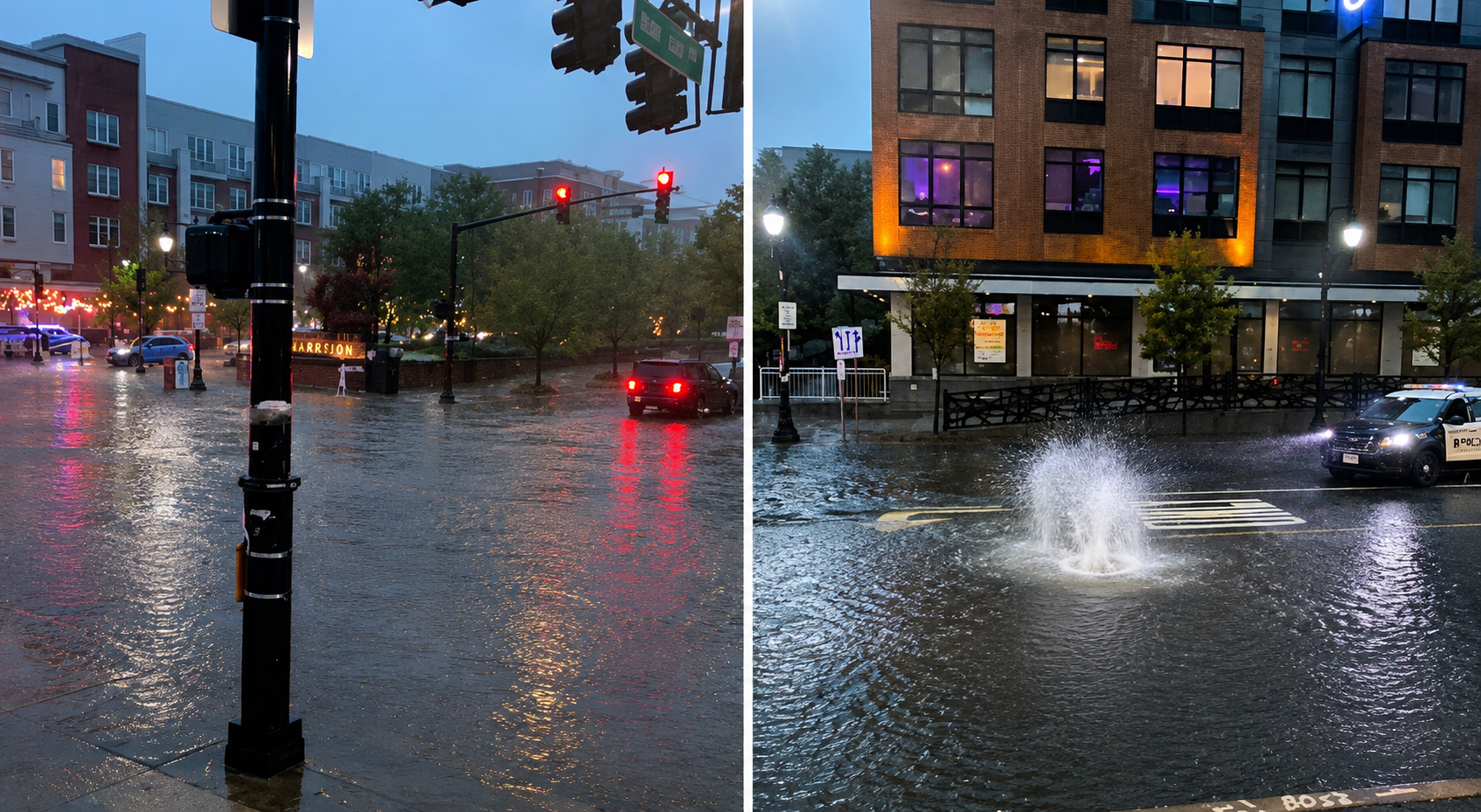
Those questions become considerably more important after watching floodwater surge through streets surrounding the PATH Station. Flood risk must be evaluated differently at a facility handling contaminated material than at an ordinary warehouse or parking lot.
The concern is not merely whether a building gets wet. Residents need to know whether dredged sediment, separated debris, contaminated water, processing areas, stockpiles, cement-stabilized material or other materials could ever come into contact with floodwater and what engineering systems would prevent contaminated material from leaving the property both through the air and/or storm waters or through accidents.
EPA's own feasibility work acknowledges flooding considerations associated with Lower Passaic construction. One technical study, for example, noted that certain construction methods such as sheet piling can temporarily alter a river's carrying capacity and potentially increase susceptibility to flooding.
The recent Harrison flooding therefore deserves more than a response that a facility will simply be designed according to applicable standards. EPA should publicly explain its flood assumptions and show residents the engineering. EPA, when asked about the details of the proposed EPA’s Toxic Sludge, responds that the contractor who ultimately is responsible for the Sludge Plant will explain the details at a later date. So EPA is not in charge of the Toxic Sludge Plant; a Contractor is. Troubling details brought out by questions asked during Public Comment Sessions.
What flood elevation is being used?
Does the design account for future climate conditions and more intense rainfall? What happens if river flooding occurs simultaneously with a major rainstorm? Where will untreated sediment be stored? Where will processed sediment be stored? What happens to contaminated process water if electrical power is lost? Are backup pumps and generators sufficient during a prolonged emergency? Is a gas-powered power plant going to be built? Could floodwater ever enter a contaminated-material handling area? And if the answer is no, EPA should demonstrate how the area next to the Harrison PATH station flooded and put on a display of water shooting out of a manhole that was obviously welded down.
A Cleanup Intended To Protect People Cannot Create A New Exposure Route
No reasonable person disputes that the contamination in the Passaic River is a serious environmental problem. EPA's own records demonstrate just how serious it is. The agency has estimated that its cleanup will permanently remove enormous quantities of contaminants from the river, including mercury, PCBs, DDT, and highly toxic dioxin.
The disagreement is over how and where that contaminated material should be handled after it is removed from the river.
A project intended to eliminate an environmental hazard should not create an unnecessary new exposure pathway in a residential neighborhood.
That is the fundamental issue Harrison residents have raised.
What Fife Said Before The 2022 Election
The controversy is also inseparable from what Harrison residents were told before the 2022 municipal Mayor & Council election.
The historical record deserves careful attention because Mayor James Fife himself discussed EPA's intentions during a recorded Harrison Redevelopment Agency meeting.
In one of the few recorded Harrison Redevelopment Agency meetings, Fife said the EPA was holding up planning for the large PSE&G property because the agency planned to use it in connection with the Passaic River dredging project. He also said the use could continue for approximately a decade. EPA has since stated that the period of use could be 10 to 30 years.
That recorded statement is significant because of what happened afterward. Then-Councilman Anselmo Millan, who was running against Fife for Mayor, organized opposition to the proposed sludge operation. An online and paper petition opposing the project collected more than 1,000 signatures online and in person. The sludge issue was gaining political momentum. And Election Day was approaching.
Residents Were Then Told The Project Didn't Exist
Councilman and Chairman of the Harrison Regular Democratic Committee James Doran, who was supporting Fife's reelection campaign and was himself seeking reelection, subsequently distributed a letter and "Fact Checker" flyer to residents in Harrison's redevelopment district.
According to copies and descriptions published by YourHarrison, the materials told residents there were no plans to dredge the river or place toxic waste in Harrison and characterized warnings about the project as a fabricated election issue.
The flyer went even further, telling residents that the dredging project they were being asked to oppose through the petition did not exist.
That messaging is difficult to reconcile with Fife's own recorded statement about EPA using the PSE&G property for the Passaic River dredging project.
The actions have been characterized as a deliberate effort by Fife and Doran to conceal the sludge proposal and mislead voters. That is a serious allegation, and the facts have been laid out in an article with copies of documents and great detail. The underlying documents and recorded statements create a legitimate public-interest question: Why were residents told there was no project when the Mayor had already publicly discussed EPA's intended use of the PSE&G property? In other words, why were Fife and Doran lying to the public?
That question has become even more consequential because EPA's subsequent planning has confirmed that a Harrison waterfront property is contemplated for significant sediment-processing and project-support activities. After the election, Mayor Fife stated his support for the EPA Toxic Sludge plant in Harrison. The community was played: the Mayor knew about the Toxic Sludge Plant and lied to residents, saying it was not coming when he admitted it was, then lied to the public verbally and in writing.
You can read and review documents and statements captured in a rare recording of a Harrison Redevelopment Meeting and Mayor & Council meeting where Mayor Fife & Councilman / Chairman of the Harrison Regular Democratic Party / Passaic Valley Sewerage Commissioner Jams Doran Lie and attack the messenger, asking the members of the Mayor & Council to object to EPA's Toxic Sludge plant for the Town of Harrison. Click this link.
The Election May Have Cost Harrison Valuable Time
The importance of what happened during the campaign goes beyond politics.
If Harrison residents had been told unequivocally that the PSE&G property was under consideration for a major Passaic River sediment-processing operation, community opposition could have developed much earlier.
Instead, residents opposing the facility say critical time was lost. The controversy is particularly troubling because the neighborhood surrounding the property was rapidly becoming residential. Apartment buildings, hotels and businesses were replacing Harrison's former industrial landscape.
What might once have been evaluated as an industrial site is now adjacent to a thriving neighborhood and one of the region's busiest transportation facilities.
The Floodwater Is A Warning
The recent video of flooding around the Harrison PATH Station adds something that engineering reports and maps cannot convey as vividly. It shows water moving through the neighborhood. It shows streets inundated. And it shows water surging upward from beneath a roadway.
Those images should become part of the public discussion over EPA's proposal. EPA is ignoring its own data that the PSE&G property is in a Flood Zone.
If the federal government intends to bring contaminated sediment containing dioxin, PCBs, pesticides, metals and material from portions of the river where NAPL has been observed into this waterfront neighborhood, EPA should have to demonstrate publicly and in detail how the Open Air Facility remains secure during the type of flooding Harrison residents can see with their own eyes.
Harrison Residents Deserve Answers
EPA has an obligation not merely to remove contamination from the river but to ensure that its remedy protects the communities through which that contamination will pass.
Harrison has spent decades transforming its southern waterfront from an industrial landscape into a residential and transportation center.
Putting a major contaminated-sediment processing operation beside that community was controversial before the latest flooding.
The sight of water pushing upward through the streets near the PATH Station makes the question considerably harder to ignore:
Why process some of the Passaic River's most contaminated sediment in a flood-vulnerable residential waterfront neighborhood when less densely populated industrial alternatives are available?
Before toxic sediment comes out of the Passaic River and onto Town of Harrison land, residents deserve a complete answer. EPA has been unable to answer the question posed several times to EPA’s Project manager, “Where else in the United States of America has the EPA placed a Toxic Sludge Plant next to a residential community?” Despite plenty of time to respond, EPA’s failure to do so suggests the answer is that the EPA has never placed a Toxic Sludge Plant in a residential community. Maybe residents are correct that the recent flooding is a reminder that the Harrison Redevelopment Zone should not be hosting a Toxic Sludge Plant in what was, almost 30 years ago, contaminated industrial property but is now a vibrant residential community next to a transit hub, Harrison PATH station, New Jersey Transit & Conrail Transit hub, and the Sports Illustrated Stadium.
Details on how Harrison Mayor James Fife & PVSC Commissioner & Harrison Councilman James Doran concealed and lied about the EPA Harrison Toxic Sludge plant are available through this link.
Comments on EPA's settlement with the polluters are open until October 15, 2026. Read more background through this link, and please submit your comments.
We encourage you to share your thoughts on the Community Discussion Board after reading this article.
For those not yet registered, participation is free and open to anyone who wants to stay engaged with Harrison’s local events, businesses, and community conversations. It's a Free Membership. Sign up today and be part of the conversation.
Submit An Article