EPA Toxic Sludge Plant Becomes Key Harrison Election Issue
Oct 05, 2026
Harrison voters heading into the November 3, 2026 General Election will have choices that may not be obvious from the names printed on the ballot.
Four Harrison residents have organized a write-in campaign under the banner Stand Up Harrison, challenging Mayor James Fife and three members of his council ticket. The write-in candidates are Michael P. Verile for Mayor, Dominick Ritorto for First Ward Council, Stephen Landfield for Second Ward Council, and Ki Sau Chan for Third Ward Council.
No Stand Up Harrison write-in candidate has been announced to challenge incumbent Fourth Ward Councilman James Doran. That does not mean the Fourth Ward contest is necessarily settled. Because a candidate can receive votes as a write-in without having his or her name printed on the ballot, another candidate could still emerge and campaign for the Fourth Ward seat before Early Voting or Election Day.
The unusual write-in campaign follows an earlier battle over access to the printed General Election ballot and comes as Harrison continues to debate development, flooding and infrastructure, municipal finances and transparency and, perhaps most prominently, the EPA's plan to use the PSE&G property in Southern Harrison between the Harrison PATH and the Jackson Street Bridge across the street from modern amenity-filled apartment buildings as part of the cleanup of contaminated sediment from the Passaic River.
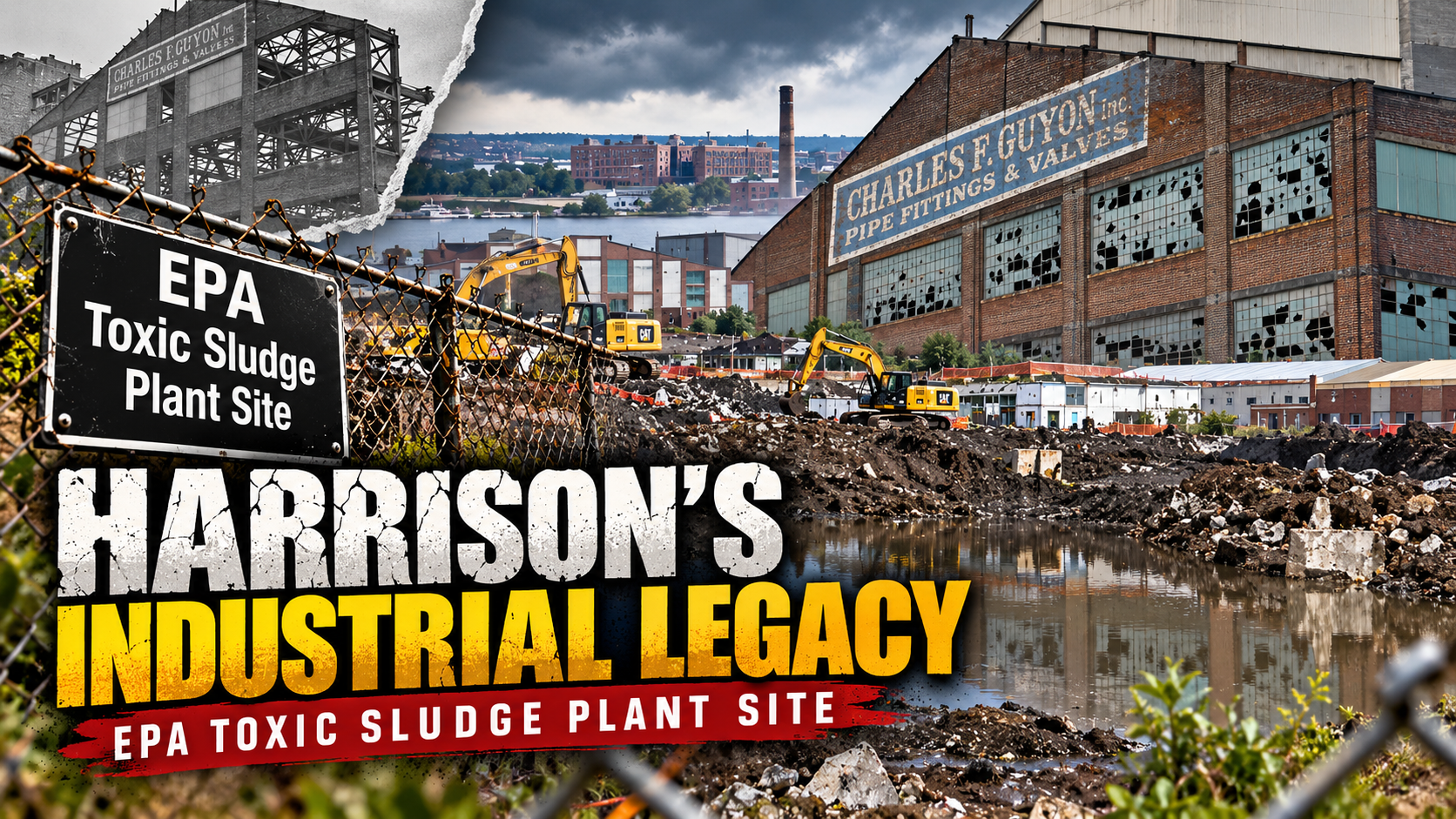
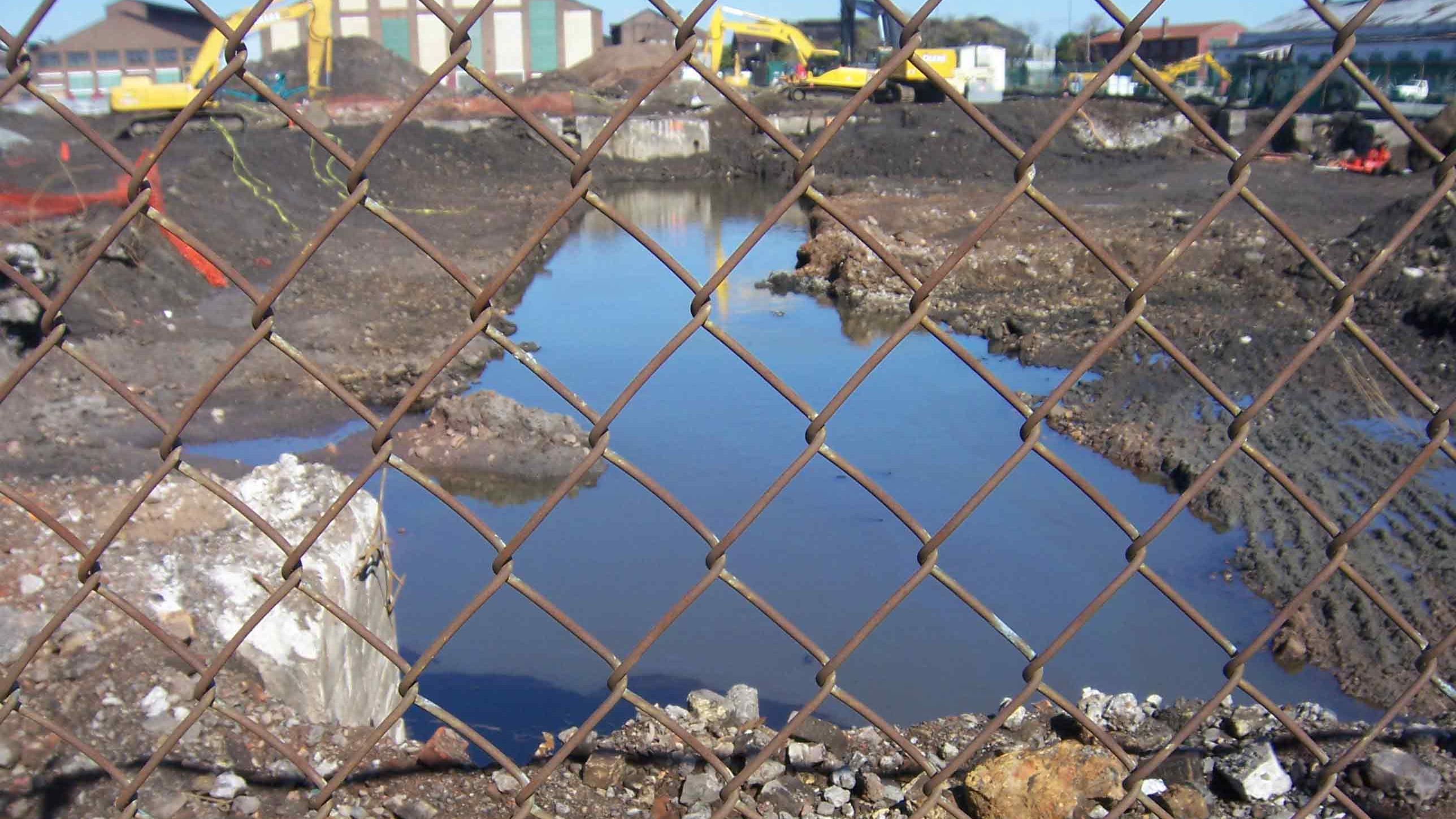
Opponents have labeled the proposed operation a Toxic Sludge Plant or Open Air Toxic Sludge Plant. EPA documents and public presentations more formally describe operations involving dredged contaminated sediment and dewatering or processing before material is transported elsewhere for disposal.
For the four write-in candidates, the controversy has become intertwined with a larger question they are putting before Harrison voters: after years of enormous residential redevelopment, is Harrison's municipal government adequately representing the community the town has become?
Fife Seeks Another Term With Council Ticket
Mayor James Fife, who promised to be an interim mayor in 2014 following the death of Mayor Raymond McDonough of a sudden heart attack in Harrison Town Hall, is seeking another four-year term. Fife took what was supposed to be an interim Mayor position and turned it into a second career, and he is seeking to add four more years if re-elected this time around, extending his term of office until 2030, when he would be 89 years old.
Running with Fife are Jesus Huaranga in the First Ward, Joseph Diaco in the Second Ward, James T. Wood in the Third Ward, and James Doran in the Fourth Ward. All are in favor of placing a Toxic Sludge Plant in Harrison on the PSE&G property.
Huaranga and Doran bring years of elected Council experience to the ticket.
Diaco is now a sitting Second Ward councilman, having taken the seat previously held by Councilwoman Ellen Mendoza. Town financial records for 2025 still identified Mendoza as a Second Ward council member with a term expiring at the end of 2026, while Harrison's current municipal records identify Diaco as the Second Ward councilman. Thus, although Diaco now has experience serving on the governing body, he entered the seat through appointment rather than by previously winning the current term at the ballot box.
Wood is the new candidate for the Third Ward seat on the Fife ticket. He is running because he replaced then-Councilman of the Third Ward, Laurence “Larry” Bennett, who ran for Hudson County Commissioner this year on the Harrison Regular Democratic Primary Ballot. Bennett lost his bid for Hudson County Commissioner. A Kearny resident, Alex Valdez, won the Hudson County Commissioner’s office. Although Bennett is currently sitting on the Council, his term expires on December 31st.
The write-in slate is trying to turn what otherwise seemed like a relatively quiet municipal election into a contest over Harrison's direction. The Harrison Regular Democratic Party does not have a website with information on each candidate or the platform they are running on. The Stand Up Harrison candidates have a website named appropriately www.StandUpHarrison.com
Stand Up Harrison Candidates:
Michael Verile: Write-In Candidate for Mayor
Michael P. Verile is challenging Fife for Mayor through a write-in campaign.
Verile's campaign biography says he moved to Harrison in 2022, initially living at The Eddy before purchasing his first home in Harrison in October 2023.
His campaign says he attended Saint Peter's University in Jersey City, trained as a physician assistant at Hofstra, and now works at a major New York City hospital, where he says he treats up to 150 patients per week.
Before entering medicine, Verile says he taught science in Hoboken and spent three years running Model United Nations at Saint Peter's University.
He also identifies his participation in the Community Advisory Group for the Passaic River cleanup as an important part of his decision to enter Harrison politics.
Verile uses his medical background as a metaphor for how he believes municipal government should operate: identify problems early instead of allowing them to become emergencies.
His campaign emphasizes government transparency and accountability, development and infrastructure, rising housing and property costs, assistance for small businesses, schools, long-term municipal financial planning, and more direct communication between EPA and Harrison residents about the Passaic River cleanup.
“Harrison is changing. Our demographics are changing. Our neighborhoods are changing,” Verile says in his campaign statement. “It's time our leadership changed too.”
Dominick Ritorto: First Ward Write-In
Dominick Ritorto is running as a write-in candidate for First Ward Council.
Ritorto describes himself as a financial professional who is pursuing a master's degree in Applied Statistics. His campaign emphasizes using financial and statistical analysis to scrutinize municipal decisions and their long-term consequences.
His connection to Harrison, according to his campaign biography, spans generations, including relatives who worked in the trades during Harrison's industrial era.
But Ritorto's campaign is looking as much toward Harrison's future as its past.
He argues that the benefits of Harrison's transformation should extend to longtime families, newer residents, senior citizens, children, and the town's small businesses.
“As a candidate for Ward 1 Council, I want to listen to residents, ask the difficult questions when necessary, and bring a financial and analytical perspective to the decisions being made at Town Hall,” Ritorto says.
For Ritorto, the campaign message is to examine the details behind municipal decisions rather than simply accept them.
Stephen Landfield: Safety and the Second Ward
Second Ward write-in candidate Stephen “Steve” Landfield brings a different professional background to the campaign.
Landfield says he has lived in Harrison for seven years and resides in South Harrison only blocks from Sports Illustrated Stadium.
According to his campaign biography, he has worked for 16 years as an environmental and fire-safety instructor and volunteers as an emergency responder in Newark and throughout Essex County.
That background makes the proposed EPA sediment-processing operation particularly important to his campaign.
“A Toxic Waste processing facility does not belong across the street from our Homes,” Landfield states in his campaign message.
Landfield argues that families living near the proposed operation deserve a full explanation of what will be processed there, the risks involved, and the safeguards that will be employed.
His campaign also connects the EPA controversy with another longstanding South Harrison concern: flooding and infrastructure.
Harrison has seen extensive residential construction around the PATH station and South Frank E. Rodgers Boulevard, yet residents still encounter flooding and drainage problems during heavy rain.
Landfield poses a basic question: How did Harrison build so much without fixing the infrastructure at the same time?
He says he is not opposed to development, but favors what he calls “Responsible Development”, growth accompanied by adequate drainage, streets, sidewalks, traffic planning, green space and other infrastructure.
His platform also calls for attention to North Harrison, including cleaner streets, downtown revitalization, sensible parking policies, safer neighborhoods, additional green space and more community activities.
Ki Sau Chan: Third Ward Write-In
Third Ward write-in candidate Ki Sau Chan, who goes by “Ki”—pronounced “key”—offers another perspective.
Chan's campaign biography says she and Johnny Yau have called Harrison home for approximately 25 years and purchased their Harrison house in 2001.
She describes growing up in a modest immigrant household with parents who worked restaurant and factory jobs. Her campaign biography describes years spent helping relatives navigate medical, insurance, and legal systems while also pursuing her own education and professional career.
Chan says she studied biology at MIT, graduated from Stanford, later pursued premedical studies at Harvard, and worked in law offices, research laboratories, and hospital administration. Her campaign biography also states that she co-authored medical research, including work published in JAMA, began medical school in New York, and ultimately left because of health and family circumstances. She says she became physically disabled and retired in 2023.
Chan's campaign provided those biographical and educational details.
Her municipal platform, however, focuses heavily on everyday Harrison issues.
Chan is calling for downtown revitalization and a Beautification Committee; attention to flooding, parking, streets and code enforcement; development that benefits the entire town; scrutiny of PILOT agreements; programs for seniors and young people; and greater transparency at Town Hall.
Her position on the Passaic River cleanup is summarized in six words:
“Clean the Passaic — not a dump in our backyard.”
Chan's campaign argues that Harrison does not have to choose between environmental cleanup and protecting residential neighborhoods.
The EPA Toxic Sludge Plant Becomes an Election Issue
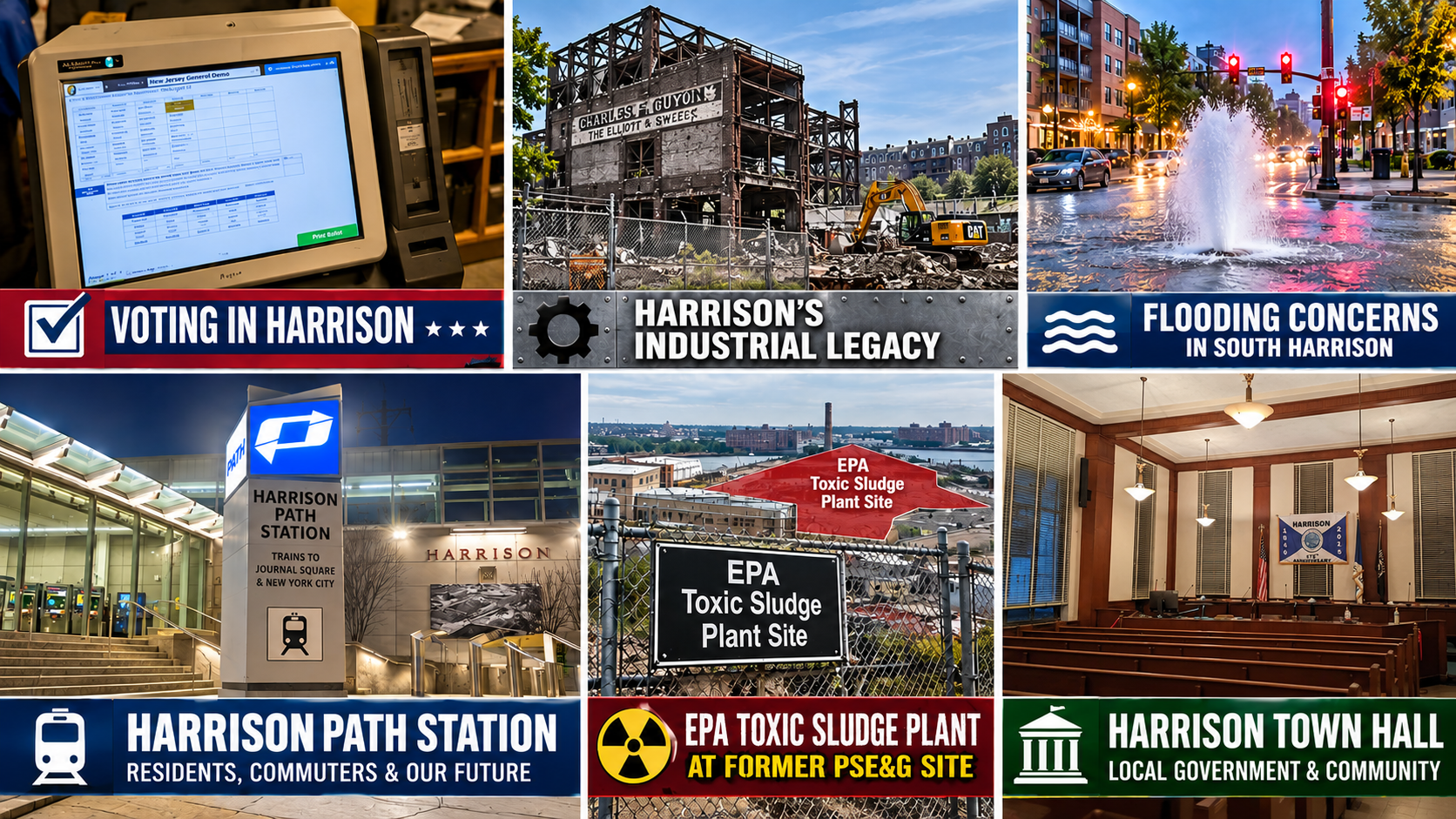
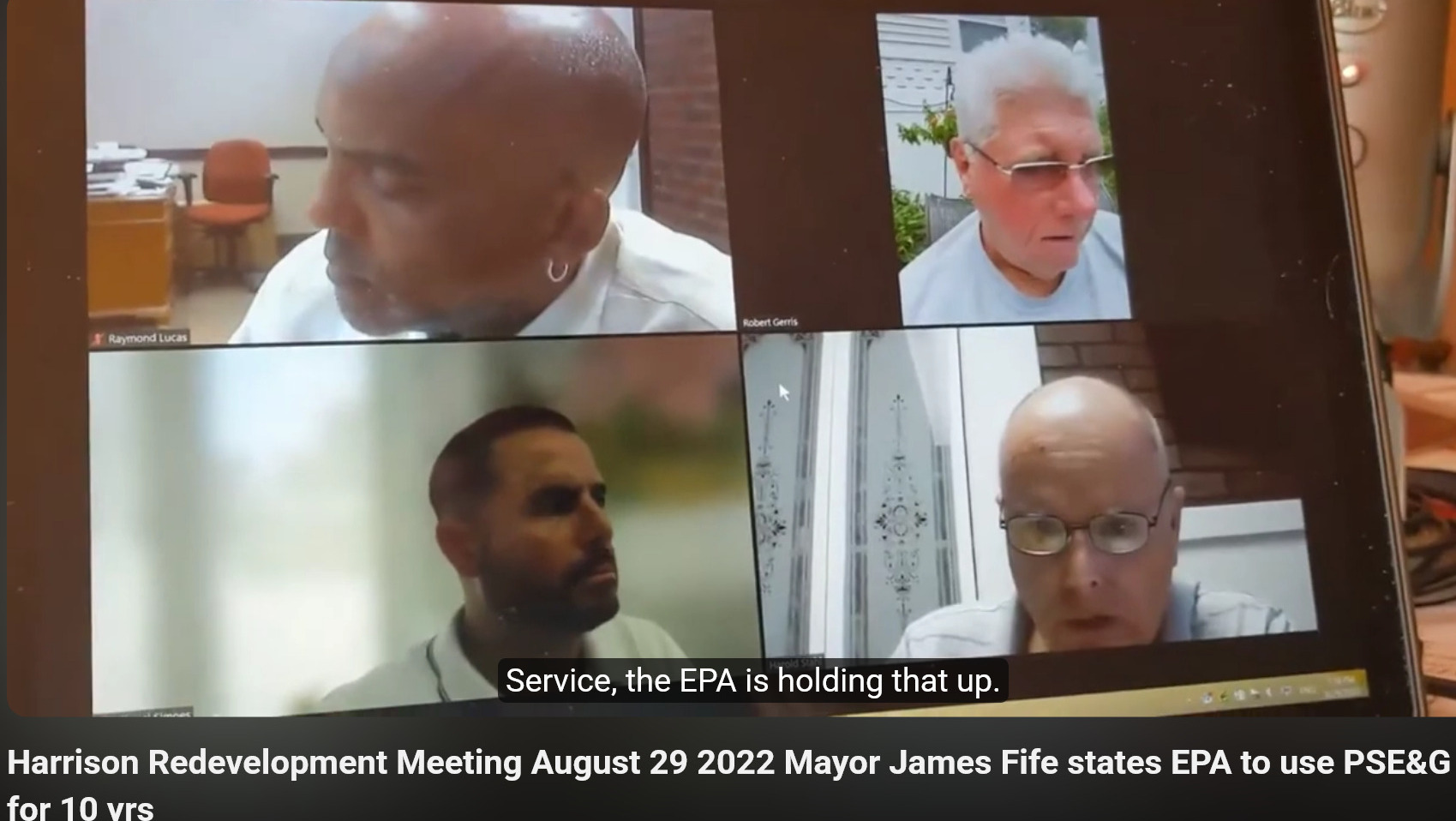
The EPA's Passaic River Toxic Sludge Plant has been a controversial issue in Harrison since August 29, 2022, when Mayor James Fife publicly revealed that the EPA planned to use the former PSE&G property in Harrison for the Passaic River dredging project.
During an August 29, 2022, Harrison Redevelopment Agency meeting, Fife stated:
“Of course, you have the biggest piece, Public Service; the EPA is holding that up. We were going to do some planning over there but the EPA is going to [be] using it for river dredge. We don’t know how long that is going to be; it could be 10 years. But it is up to EPA and PSE&G to decide what is going on there.”
In a rare circumstance for a comment that would later become the subject of political controversy, Fife's statement was captured and preserved on the Zoom video recording of the meeting.
Fife's reference to a possible 10-year operation, however, may substantially understate how long the Harrison property could be used. At subsequent public meetings concerning the Passaic River cleanup, EPA officials have discussed a much longer potential timeframe, indicating that use of the site could extend for 20 to 30 years.
That difference is significant for Harrison residents. A facility operating for 20 or 30 years would not represent a temporary inconvenience lasting several construction seasons. It could potentially operate for a generation alongside a section of Harrison that has been transformed from an industrial district into a densely developed residential neighborhood and major transportation hub.
Another important uncertainty remains: no final detailed design shows exactly how the Harrison processing facility will be constructed and configured. The EPA is not expected to prepare the plant's final physical design. Instead, the contractor ultimately awarded the contract to construct and operate the facility would develop the detailed facility design.
That means residents are being asked to evaluate a project whose final configuration, including many of the details that could directly affect surrounding neighborhoods, has not yet been established.
The plans presented thus far make it clear that the operation is contemplated as an open-air processing facility, rather than one in which the dredged contaminated sediment and processing operation would be completely contained inside an enclosed building.
That distinction matters because the material being removed from the Passaic River includes sediment contaminated with dioxin and other industrial pollutants. An open-air operation means that the contaminated dredged material would not be handled entirely within a building that provides a physical enclosure between the processing operation and the surrounding community.
For residents living near the PSE&G property, that raises concerns about whether microscopic contaminated particles, including particles containing dioxin, could become airborne during the handling, dewatering, and processing of dredged sediment. It also raises questions about what engineering controls, air monitoring, dust suppression and other safeguards the eventual contractor will be required to employ when the facility's final design has not yet been completed.
Mayor Fife & Councilman Doran Lied To Residents
The controversy intensified after Mayor Fife and Councilman James Doran denied making such a statement and accused then-Councilman and mayoral candidate Anselmo Millan, as well as local attorney John M. Pinho, of misrepresenting what had occurred.
Pinho had raised questions at the August 29, 2022 Harrison Redevelopment Agency meeting concerning the lack of green space in Harrison's Redevelopment Zone. Under pressure to identify land that could provide additional green space, Mayor Fife disclosed the EPA's anticipated use of the PSE&G property. Link to video recording here.
Critics, including Pinho, contend that Fife revealed information not previously disclosed to Harrison residents: that the EPA intended to use the property in connection with its Passaic River cleanup and dredging operation. They argue that, rather than informing and mobilizing residents to oppose the proposal, the administration had kept the plan from the public. The full history of that controversy is available online in an article titled Concealment, The Truth & Lies About EPA's Toxic Sludge Plant in Harrison NJ. Click here for the article
The underlying cleanup involves contaminated sediment in the Passaic River, including sediment contaminated with dioxin and other industrial pollutants. EPA's remedy involves dredging contaminated sediment, processing or dewatering it at upland facilities, and transporting the processed material for disposal.
In Harrison, the controversy centers on the former PSE&G property along South Frank E. Rodgers Boulevard.
That section of Harrison is dramatically different today from the heavily industrial community that existed there decades ago. Large apartment developments now surround the area, while thousands of residents and commuters regularly travel through South Harrison to use the PATH station and attend events at Sports Illustrated Stadium.
Nevertheless, the Harrison site remains part of the planning for handling material associated with the Passaic River cleanup. Recent reporting on EPA cleanup documents describes moving dredged material to upland processing facilities for dewatering and handling before transporting it elsewhere for final disposal.
That prospect has fueled opposition among Harrison residents and the write-in candidates in the municipal election.
The political controversy has continued as the EPA's cleanup plans have advanced. Fife's August 2022 statement that the operation “could be 10 years,” the substantially longer 20-to-30-year timeframe subsequently discussed by EPA officials, and later political communications disputing what was actually planned for Harrison have become part of a larger debate over what town officials knew, when they knew it, what residents were told, and how long Harrison could ultimately be expected to host the operation.
Councilman Doran subsequently discussed Harrison's role in the regional cleanup in terms of communities having “some skin in the game.”
Critics of Fife and Doran contend that Harrison should not have to bear the environmental and quality-of-life burdens associated with an open-air processing operation next to an area transformed through residential redevelopment.
Supporters of the broader cleanup, meanwhile, emphasize the need to remove heavily contaminated sediment from the Passaic River and point to the Superfund cleanup project's regional scope.
The disagreement, therefore, is not simply about whether the contaminated Passaic River should be cleaned. The central question for Harrison is where the contaminated dredged material should be handled and whether the former PSE&G property remains an appropriate location for an open-air processing facility that could operate for decades, given the extensive residential redevelopment now surrounding the site. Not to mention it sits next to Harrison PATH, a major transit hub, the Northeast Railway Corridor, and the Sport Illustrated Stadium. Let's not forget the property is in a flood plain, and there is flooding up to the Harrison PATH Station
That distinction is likely to remain one of the defining issues in Harrison's municipal election.
As John M. Pinho has repeatedly framed the issue: “Where else in the United States of America has the EPA placed a Toxic Sludge Plant in a residential neighborhood?”
Pinho has posed that question at multiple EPA meetings. According to Pinho, EPA Project Manager Alice Yeh has not provided an example. Nor, he says, have any of the dozens of EPA employees working on the Passaic River cleanup project identified another community where a comparable operation has been placed in the midst of a residential neighborhood.
HOW TO VOTE FOR A WRITE-IN CANDIDATE
Harrison voters have three principal ways to vote in the November 3 General Election: Vote-by-Mail, in-person Early Voting, and in-person voting on Election Day. The mechanics of casting a write-in vote differ depending on the method used.
Vote-by-Mail
A voter using a paper Vote-by-Mail ballot should locate the contest for the particular office—Mayor or the appropriate ward council seat—and use the Personal Choice/write-in area provided for that contest.
The voter should clearly enter the intended write-in candidate's name in the appropriate write-in space and follow the ballot's instructions for marking the corresponding choice.
New Jersey instructs Vote-by-Mail voters generally to completely fill in the oval next to their selections using blue or black ink. After completing the ballot, the voter must fill out and sign the certificate attached to the inner envelope, place the ballot inside that envelope, seal it, and place the certificate envelope inside the mailing envelope.
New Jersey's 2026 voter-intent guidelines specifically recognize votes for people whose names are written in the Personal Choice/write-in area.
Voters should carefully read the instructions printed on their actual Hudson County ballot before marking it.
You cannot return a completed Vote-by-Mail ballot at an Early Voting location or Election Day polling place. Instead, you can return it by mail, deposit it in an authorized secure ballot drop box by the deadline, or deliver it to the County Board of Elections.
Writing In a Candidate on the Voting Machine
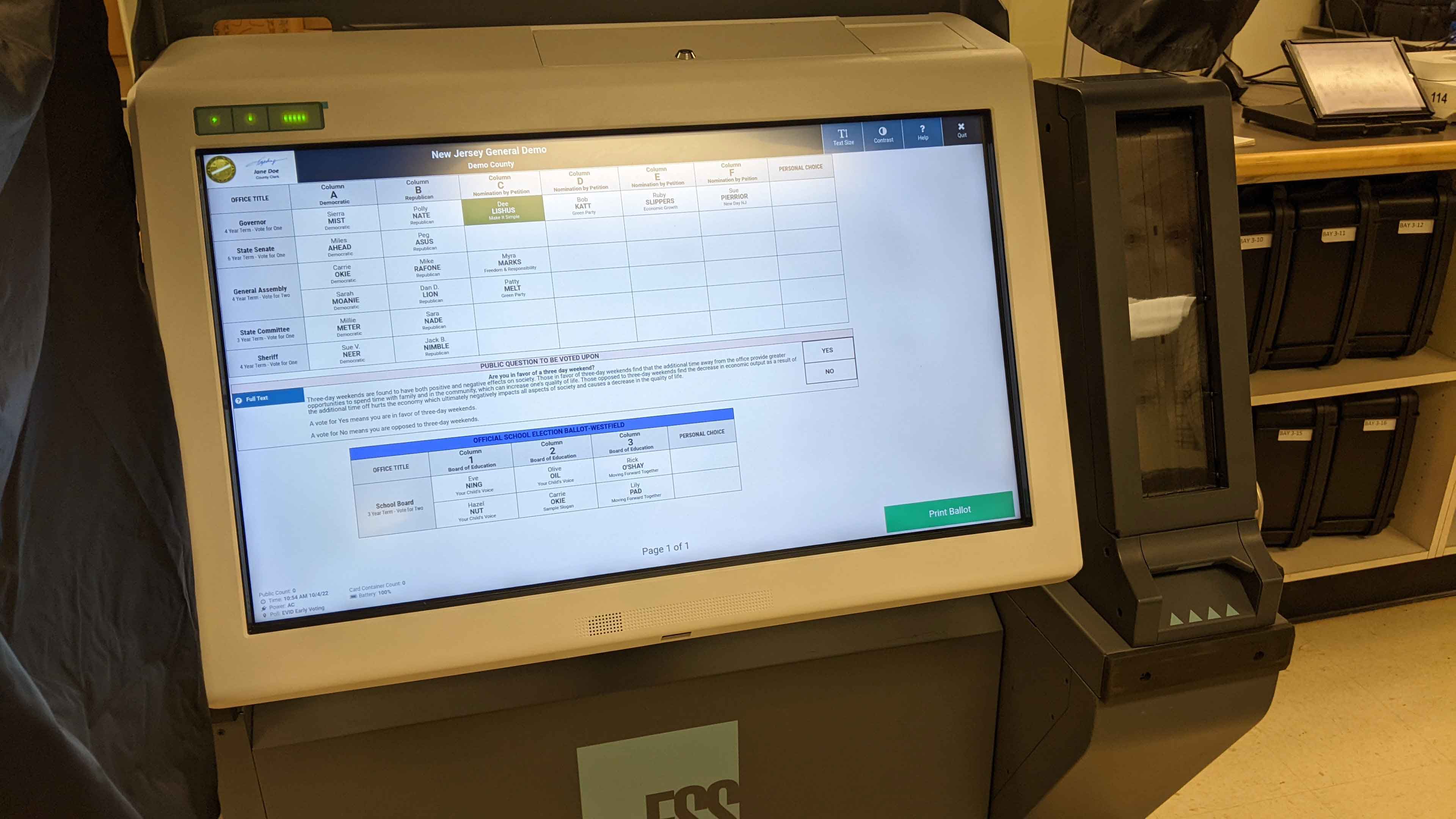
Hudson County uses the ES&S ExpressVote XL voting system, which provides a touchscreen ballot and produces a paper record for voters to review before casting their ballot.
The write-in procedure is straightforward but requires voters to select the correct contest.
On an ExpressVote XL, the voter selects the Write-In/Personal Choice area for the office being voted on. An onscreen keyboard then appears.
The voter types the candidate's name and selects “Accept.”
The write-in candidate's name should then appear as the voter's selection for that contest.
After completing the ballot, the voter selects “Print Ballot.” The machine produces a paper record visible through the machine's viewing window. The voter should carefully review that printed record and make certain the intended write-in candidate appears for the correct office before selecting “Cast.”
That final review is particularly important in a write-in election.
Early Voting
New Jersey's in-person Early Voting period for the General Election runs from Saturday, October 24 through Sunday, November 1.
Early Voting locations are open 10 a.m. to 8 p.m. Monday through Saturday and 10 a.m. to 6 p.m. on Sundays. No appointment is required.
Early Voting Begins October 24
Harrison voters will not have to wait until Election Day to cast their ballots. In-person early voting for New Jersey's 2026 General Election will run from Saturday, October 24 through Sunday, November 1, 2026. Early voting locations will be open Monday through Saturday from 10 a.m. until 8 p.m. and Sundays from 10 a.m. until 6 p.m. No appointment is necessary. Election Day itself is Tuesday, November 3, 2026, when traditional polling locations will be open from 6 a.m. until 8 p.m.
Harrison Early Voting
For Harrison residents, the most convenient early voting location is Harrison Town Hall, 318 Harrison Avenue, Harrison, NJ 07029. The early voting site is located in the Town Hall lobby.
Harrison voters, however, are not required to cast their early ballot in Harrison. During the early-voting period, a registered Hudson County voter may vote their ballot at any designated Hudson County early-voting center, regardless of the Hudson County municipality in which the voter resides. That means a Harrison voter who works in Jersey City, for example, can vote at an early-voting center there rather than returning to Harrison.
Kearny Early Voting
Neighboring Kearny also has an early-voting location at Kearny Town Hall, 402 Kearny Avenue, Kearny, NJ 07032. Because both Harrison and Kearny are in Hudson County, eligible Harrison voters may use the Kearny early-voting center, just as Kearny voters may use Harrison's early-voting center during the designated early-voting period.
Jersey City Early Voting Locations
Voters also have several early-voting options in neighboring Jersey City. According to the New Jersey Division of Elections' current Hudson County list, early voting will be available at Bethune Center, 140 Martin Luther King Drive; DiFeo Auto Dealership, 237 Mallory Avenue; Hudson County Plaza, 257 Cornelison Avenue; Jersey City City Hall Annex, 4 Jackson Square/39 Kearney Avenue; Jersey City City Hall, 280 Grove Street, using the Montgomery Street entrance; Loyal Order of the Moose Lodge 266, 60 West Side Avenue; and Pershing Field Community Center, 816 Summit Avenue.
The Jersey City locations may be particularly useful for Harrison residents who commute through Jersey City or who cannot conveniently reach Harrison Town Hall during the early-voting period. Because early voting uses a countywide vote-center system, a registered Harrison voter can cast the appropriate Harrison ballot at one of these Jersey City locations during early voting, or at any other Hudson County town where they are during the Early-Voting period.
Early voting should not be confused with Election Day voting. During early voting, Hudson County voters can use any Hudson County early-voting location. On Election Day, November 3, voters who choose to vote in person must report to their assigned Election Day polling location. Voters should therefore verify their Election Day polling place if they decide not to vote during the October 24 through November 1 early-voting period.
Election Day
Election Day is Tuesday, November 3, 2026.
Polls in New Jersey will be open from 6 a.m. until 8 p.m. Voters casting ballots on Election Day must vote at their assigned polling location. If you are in the polling place by 8 p.m., you can vote no matter if 8 p.m. has passed.
The same basic ExpressVote XL write-in procedure applies: select the Write-In/Personal Choice option for the appropriate contest, type the candidate's name, accept the selection, and carefully inspect the printed record before finally casting the ballot.
Voters who requested and received a Vote-by-Mail ballot but did not return it generally cannot simply switch to a regular machine ballot on Election Day. Under New Jersey law, such voters may instead be required to cast a provisional paper ballot at their polling place.
Know the Name—and the Office
For Harrison voters supporting the Stand Up Harrison write-in slate, matching the correct name with the correct office is essential:
Mayor (Townwide)— Michael P. Verile
First Ward Council — Dominick Ritorto
Second Ward Council — Stephen Landfield
Third Ward Council — Ki Sau Chan
No Stand Up Harrison write-in candidate has been announced for Fourth Ward Council, where James Doran is running. A Fourth Ward write-in candidate could, however, still emerge before voting begins.
Because write-in candidates are not presented to voters in the same manner as candidates whose names are printed on the ballot, voters intending to cast a write-in should take extra care to select the correct office, enter the intended candidate's name, and review the completed ballot before casting it.
A Different Kind of Harrison Election
The 2026 municipal election presents Harrison voters with two very different paths.
Fife and members of his ticket take credit for successfully redeveloping Harrison, NJ. But they are supporting an EPA Toxic Sludge Plant that will unravel the success brought about by the vision of the late Mayor Raymond McDonough and his then Council, which included former Councilman Anselmo Millan, to transform the southern part of Harrison from a wasteland of contaminated and abandoned industrial properties into a vibrant office and residential community. The office portion did not materialize, but the residential portion has led to the collection of 17 million dollars per year and rising for the Town of Harrison operating fund. Quite an accomplishment.
Success Of Redevelopment: Mayor McDonough's Vision For Harrison
Mayor Fife has stated that the success of Harrison’s Redevelopment Zone was not his administration’s success but that of the late Mayor Raymond McDonough, who, as Mayor Fife put it, Raymond would have experienced the same success if he had continued to live. Fife’s statement begs the question: Why risk returning Harrison to its contaminated industrial past and expose the public to microscopic dioxin particles? Who wants to live next to a Toxic Sludge Plant? Why would elected officials support such a plan?
The write-in challengers argue that the transformation requires a different approach to government—one that emphasizes improved infrastructure, flood controls, development oversight, municipal finances, transparency (including recording meetings and Agendas that don’t change on the fly), and greater resident involvement/input.
Hovering over that debate is the Passaic River.
Everyone involved can agree that generations of industrial pollution left the river contaminated and that remediation is necessary. The political dispute is over what part Harrison should play in that cleanup and whether contaminated dredged sediment should be processed on the former PSE&G property next to the residential neighborhood that has risen around it.
For Verile, Ritorto, Landfield and Chan, winning will require more than persuading voters that Harrison needs change.
They must also persuade voters to take the additional step required of every write-in campaign: remember their names, find the correct write-in option, and enter those names for the correct offices when they vote.
That makes voter education more than just part of their campaign. It may ultimately determine whether they have a campaign capable of challenging Harrison's established political organization at the ballot box.
Your Harrison Is Your Community — Join the Conversation
Local news is better when the community is part of it. After reading this article, tell your neighbors what you think, share information, ask questions, or start a discussion on the Community Discussion Board.
Not a member yet? Joining Your Harrison is free. Become part of a growing community of residents, former residents, local business owners, and others who care about what is happening in Harrison and West Hudson.
Join Your Harrison FREE today, then make your voice part of the conversation.
Submit An Article